
Prime Minister Narendra Modi's visit to Myanmar is aimed at transforming the arch of Bay of Bengal into the Circle of Southeast Asia, says Anirban Ganguly.

Addressing the plenary session of the 11th Asia-Europe Meeting Summit here in the Mongolian capital, Vice President Hamid Ansari said, "all our societies today face unprecedented levels of threat from terrorism in all its manifestations. The most recent example is what has happened, most unfortunately in France."
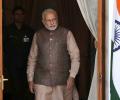
Ministers in the Narendra Modi government have been busy making presentations on their 100 days of work. But what these presentations do not mention is that decisions by ministers have been few, with plenty of papers and files moving to the Prime Minister's Office, which is increasingly emerging as a centralised clearance point, even for routine and ordinary issues. Though policy paralysis was a term used freely for the United Progressive Alliance regime, questions are now being raised about pending decisions across ministries and whether at least some ministers have turned redundant.
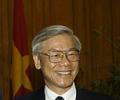
India-Vietnam relationship has its own imperatives and dynamism. In India's look east policy Vietnam has been the major pivot, at least in terms of security and strategic imperatives, says Rup Narayan Das.

Indian talent may soon be allowed to work in France without a degree from a French institute.

A list of all the foreign visits taken up by PM Narendra Modi this year and their outcomes.
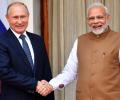
'Washington senses that the anchor sheet of India's strategic autonomy lies in its longstanding partnership with Russia, which remains firm and immutable despite the changes in world politics in the post-Cold War era,' notes Ambassador M K Bhadrakumar.<
India is projected to see moderate average annual growth of 5.9 per cent during the 2014-18 period amid the country witnessing macroeconomic weaknesses, according to Paris-based think tank OECD.

China sees India and Japan's 'North East Road Network Connectivity Improvement Project' as a challenge to its OBOR, says Rajaram Panda.
With an unexpected new turn in Kashmir, an ominous Afghanistan, a reliably unpredictable Trump, and an unfathomable reversal with RCEP, Modi may have to reinvent his character, suggests Ambassador B S Prakash.
'While many Chinese policy makers dismiss the political, economic and technological component of US-India relations, they express caution on the defence-related ties which also happens to be a major driver in US-India relations,' explains China expert Srikanth Kondapalli.
The world economy is going through a tough phase.
'India will come increasingly in the US crosshairs if it insists on maintaining its strategic autonomy, warns Ambassador M K Bhadrakumar.

As the pandemic unfolded, the India-China relationship has come under severe stress. To restore normalcy, agreements between the two countries must be respected scrupulously in their entirety. Where the Line of Actual Control is concerned, any attempt to unilaterally change the status quo is unacceptable, declares External Affairs Minister Dr Subrahmanyam Jaishankar.

This is Modi's first bilateral visit to Myanmar.

On the backdrop of surgical strike, the US advised caution given the heavy militarisation between the two neighbours.
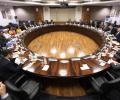
'India appears to have stood its ground on strategic autonomy by resisting US pressure on Russia, China and Iran, but succumbed to the temptation to walk into a tighter embrace in defence cooperation, a high priority of the Trump administration,' notes Ambassador T P Sreenivasan.
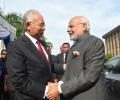
Both countries will advance maritime security and strengthen disaster response in the region, says Modi.

With PM Modi's visit, the time has come for a relook at India-Myanmar ties, and elevate the relationship to higher levels, says Dr Rahul Mishra.
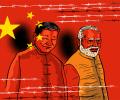
'As China rises and India grows to reclaim their earlier positions on the world stage as two of the largest economies and most important countries, there will indeed be some contention between these two powers.' 'There will also be plenty of space and room for cooperation amongst the two of us.' 'As our economic size increases to match the fact that we are the two most populous nations on earth, it will be all the more important for us to keep the interests of our peoples as well as those of the rest of the world in mind.' 'We shall have to grow together rather than as separate and disparate entities,' points out Ambassador Gautam Bambawale -- who served as India's ambassador to China -- in the 7th annual lecture of the Indian Association of Foreign Affairs Correspondents on March 1, 2019.

It is often said that the India-Indonesia relationship is overshadowed by mutual neglect.

'If Myanmar falls to China, let it.' 'Sooner or later the rulers of the country will have to call New Delhi.'
India was U Thaung Tun's first port of call after his appointment, which should intrigue China and Pakistan, says Rajeev Sharma.

The government has made its initial moves, good and not-so-good, while the roll-out in some cases has been slow.
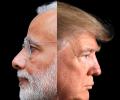
Here's why Rajeev Srinivasan believes there will be nothing particularly positive about the prime minister's US visit.

History beckons trailblazers Bengaluru FC as they lock horns with Air Force Club of Iraq in the summit clash of AFC Cup in Doha on Saturday, aiming to become the first Indian football club to clinch a continental title. Bengaluru FC have already created history by becoming the first Indian club to qualify for the final of a continental tournament after they defeated defending champions Johor Darul Ta'zim in the semifinals on 4-2 aggregate last month. Before this, the farthest an Indian club had advanced in a continental tournament was the two AFC Cup semifinal appearances by Dempo in 2008 and East Bengal in 2013.
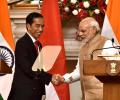
The two countries, among the very few fast growing large economies globally, also decided to boost bilateral trade and investment in areas of oil and gas, renewable energy, IT and pharmaceuticals, during talks between Prime Minister Narendra Modi and Indonesian President Joko Widodo.

'To consider BRICS anything more than a temporary club with some common interests would be folly. The goal should be to induce others (Japan, ASEAN, South Africa) to align with us -- a non-threatening, democratic nation, rather than with malevolent China or waning America. For us to consider aligning with either China or the US would be absurd. India is just too big to be a sidekick,' says Rajeev Srinivasan.

'The world wants India to succeed. It also worries now that India over-promises and under-delivers,' says Shekhar Gupta.

'Prime Minister Manmohan Singh may be anxious for a farewell visit to Washington in October,' says retired Ambassador K C Singh, 'but bending backwards on America's PRISM policy is going to earn him scorn at home and contempt abroad.'

If Indian PM boycotts the CHOGM, it is likely to add to Sri Lanka's bitterness. This would not help India's desire to add more depth and content to its relations with Sri Lanka but its ability to influence Sri Lanka's decision making process on the both strategic issues and on Tamil minority issues, says Colonel (retd) R Hariharan.

'I have never seen anybody disliked more as prime minister than Modi.' 'What is interesting is in his prime ministership, no matter whatever happens in any corner of India, Modi is blamed for it.' 'Modi has not suspended any Constitutional liberties. No Opposition leader has been put in jail... Modi is not Hitler.'

'India alone cannot walk the path of peace. It also has to be Pakistan's journey to make,' says Prime Minister Narendra Modi at the government's geo-political flagship initiative "Raisina Dialogue-II".

Continued uncertainty or confrontation in the Asia-Pacific is clearly in no one's interest as it will affect major powers' attempts to restructure their economies and revive growth. Conflict would roll back the gains to each of our countries of 40 years of stability and peace, says Shivshankar Menon.

20 years ago this day, May 11, 1998, India conducted its second nuclear test at Pokharan in Rajasthan. In a fascinating interview on Rediff.com, K Subrahmanyam revealed how Indian PMs reacted to nuclear ambitions.

Narendra Modi's promise to allow states a bigger say in strategising and building foreign policy is unexceptionable, says TP Sreenivasan.

The announcement of the formation of the BRICS bank will have as much an impact about how the non-G7 countries manage their economies and their foreign reserves, as it does on the intellectual discourse. The development priorities and agenda which was hitherto set by western experts responding mostly to western priorities and notions will now have to compete with an intellectual tradition that is and can be very different, says Mohan Guruswamy.
